
At every stage of production, responsibility.
Our approach to responsible manufacturing is defined as much by the principles we uphold towards our employees, business partners, supply chain and the environment as by the quality of our products.
From working conditions and material sourcing to chemical management and environmental protection, we conduct all our activities in accordance with applicable legislation and the principles set out on this page.
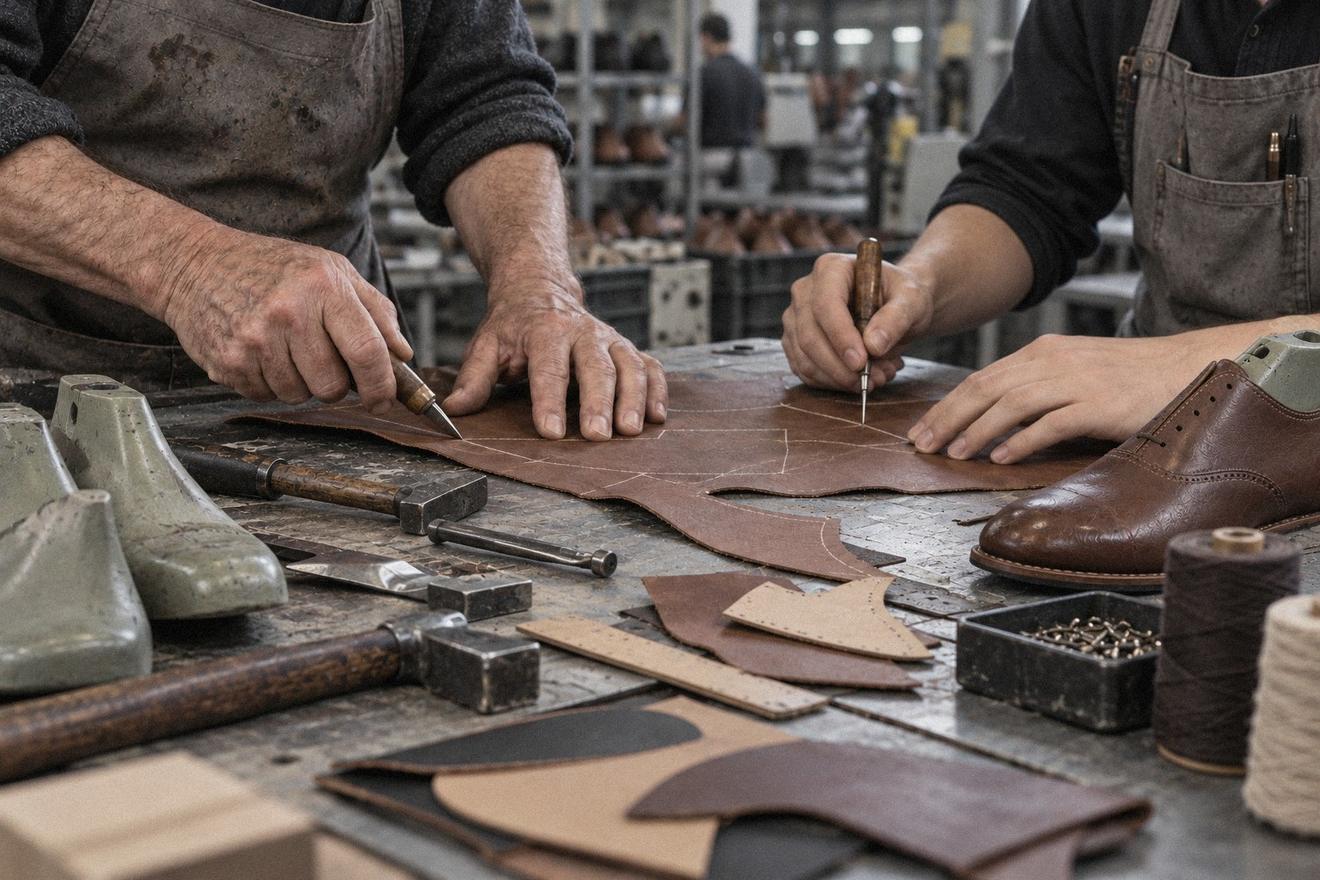
People are at the heart of production.
Shoemaking relies as much on the experience, skill and expertise of its people as on the technical infrastructure they work with.
Our approach to working life rests on respect for employee rights, safe working conditions, fair employment and professional development. We operate in compliance with Labour Law No. 4857, Occupational Health and Safety Law No. 6331 and the fundamental principles and rights at work of the International Labour Organization (ILO).
Voluntary & registered employment
All employment with us is freely chosen. We do not accept forced labour, debt bondage or any practice that unlawfully restricts an employee's freedom to leave.
All our employees are formally registered, and employment procedures are conducted in line with statutory registration and social security obligations. Our full compliance with tax and social security obligations is certified by the Platinum Certificate.
Preventing child labour
No one below the legal minimum working age is employed.
The duties, working hours and working environment of young workers are determined according to their age and the relevant legal requirements. They are never assigned to work that could endanger their health, safety or development.
Fair working conditions
Remuneration, working hours, overtime and rest entitlements are governed by applicable labour legislation.
Wages are paid on time, overtime is compensated, and working conditions are clearly defined for every employee.
Equal opportunity & respect
We are committed to equal treatment and non-discrimination in recruitment, pay, training, the allocation of duties and professional development.
Physical, verbal, psychological or sexual harassment, intimidation and degrading treatment are not tolerated.
The employment and working conditions of employees with disabilities are arranged in accordance with the relevant legislation and their individual needs.
Occupational health & safety
A safe working environment is a fundamental requirement of our manufacturing operations.
Risk assessments, employee training, machine safety, ventilation, personal protective equipment and emergency preparedness are managed in compliance with the relevant legislation. This work is carried out under the supervision of an occupational physician and an occupational safety specialist; risks in the production environment are assessed regularly and the necessary measures are implemented.
Employee wellbeing
At our factory, we provide employees with free meals and shuttle transport to and from work.
The physical conditions and hygiene standards of the workplace fall within the scope of our occupational health and safety practices.
Professional development & knowledge transfer
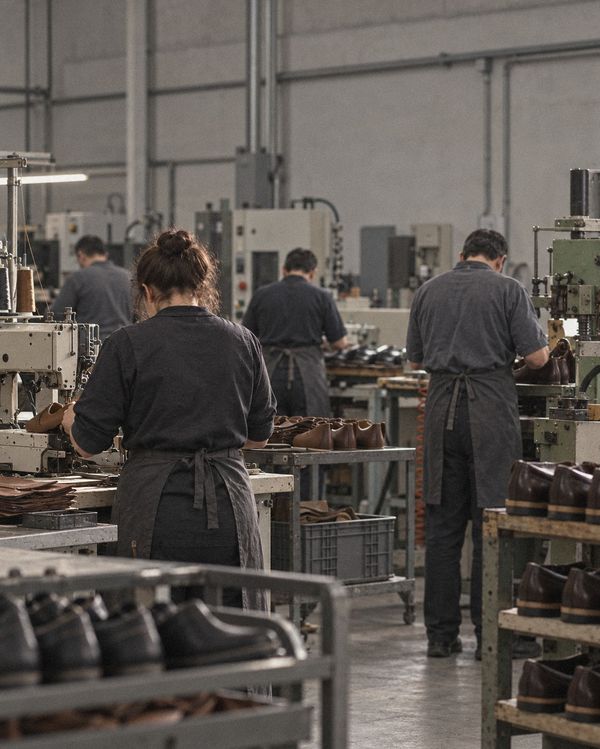
Throughout our many years of manufacturing experience, the transfer of practical know-how between employees has played a central role.
Every new employee in cutting, closing, lasting or finishing is trained alongside an experienced member of their own department.
Responsibility that begins at the source.
The making of a shoe begins well before materials reach the factory. The sourcing of leather, linings, soles and other components determines the quality of the product, the continuity of production and the reliability of the supply chain.
We manage our supplier relationships on the basis of material suitability, regulatory requirements, quality expectations and commercial continuity.
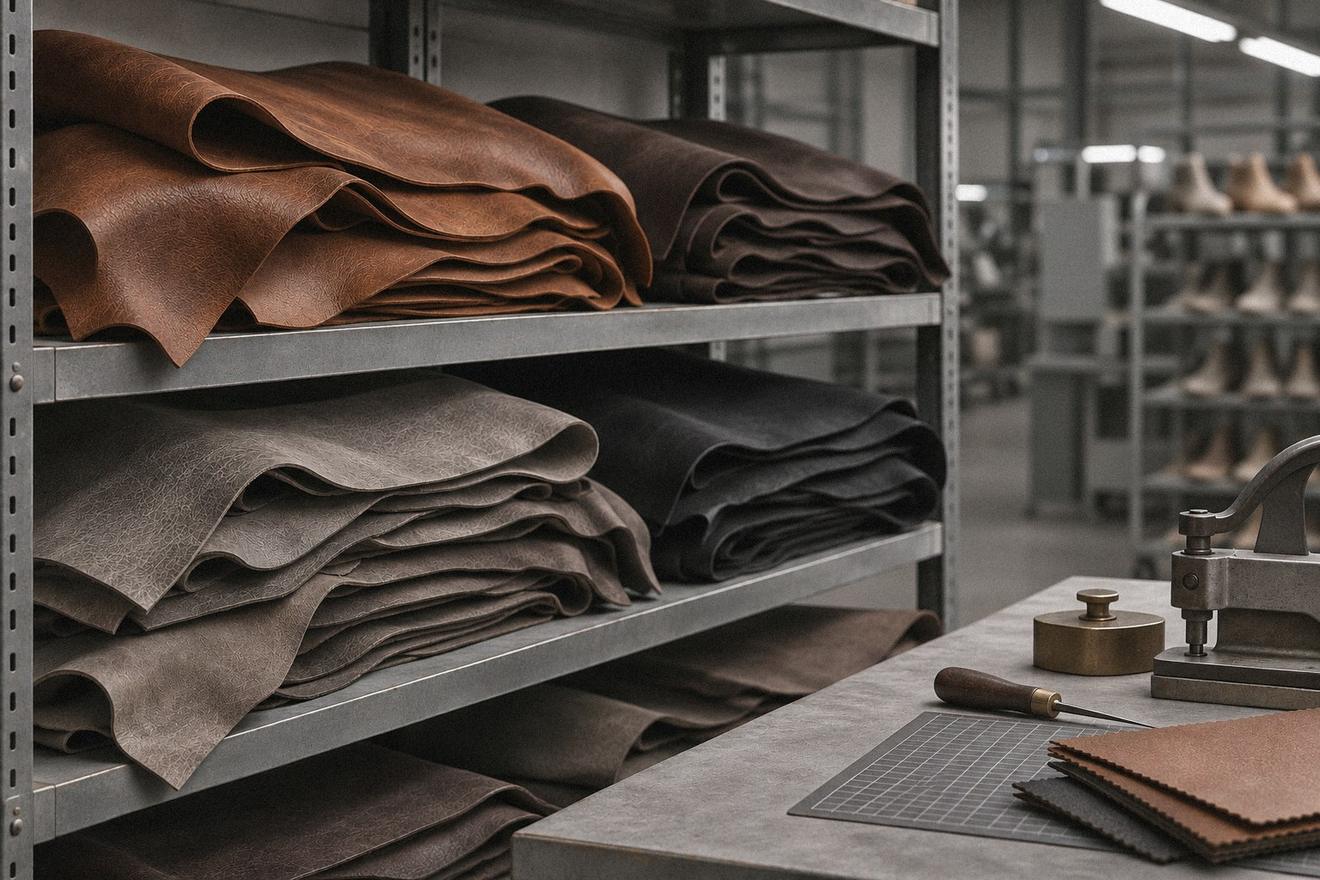
Supplier selection
Suppliers are selected on the basis of material quality, technical suitability, delivery performance and compliance with the relevant legal requirements.
We favour long-term supplier relationships, which allow a closer understanding of material characteristics and ensure continuity in production.
Incoming material conformity
Every material accepted into production is checked against the technical specification of the relevant product. For materials with variable surface characteristics, such as natural leather, thickness, colour, grain and visible defects are assessed; for other components, suitability for the model's construction and intended use is the deciding criterion.
Materials that do not meet technical requirements are not accepted into production.
Before procurement, every material, leather, lining leather and trims in particular, is tested for carcinogenic substances at EKOTEKS, an independent laboratory and IHKIB affiliate (Istanbul Apparel Exporters' Association), and at the TASEV (Turkish Footwear Industry Foundation of Research, Development and Education) laboratory affiliated with TASD (Footwear Industrialists Association of Turkiye). Materials that fail these tests are not procured.
Material origin & traceability
Information on the origin of materials is obtained from suppliers in line with product requirements and the requests of our business partners.
Country-of-origin information, supplier declarations and the relevant conformity documents are requested according to the scope of each project, and material records are kept accurate and accessible.
Protected species
We comply with international trade restrictions on materials derived from protected species.
Leather and components derived from species listed under CITES (Convention on International Trade in Endangered Species of Wild Fauna and Flora) are not used in our production.
Supplier responsibility
We expect our suppliers to comply with the labour, environmental and product safety legislation that applies to their operations.
Supplier compliance is reviewed through declarations of conformity, technical documentation and other required records, according to the nature of the material or service concerned.
Where non-conformities are identified, depending on their nature, corrective action is required, the supplier is re-evaluated or the business relationship is terminated.
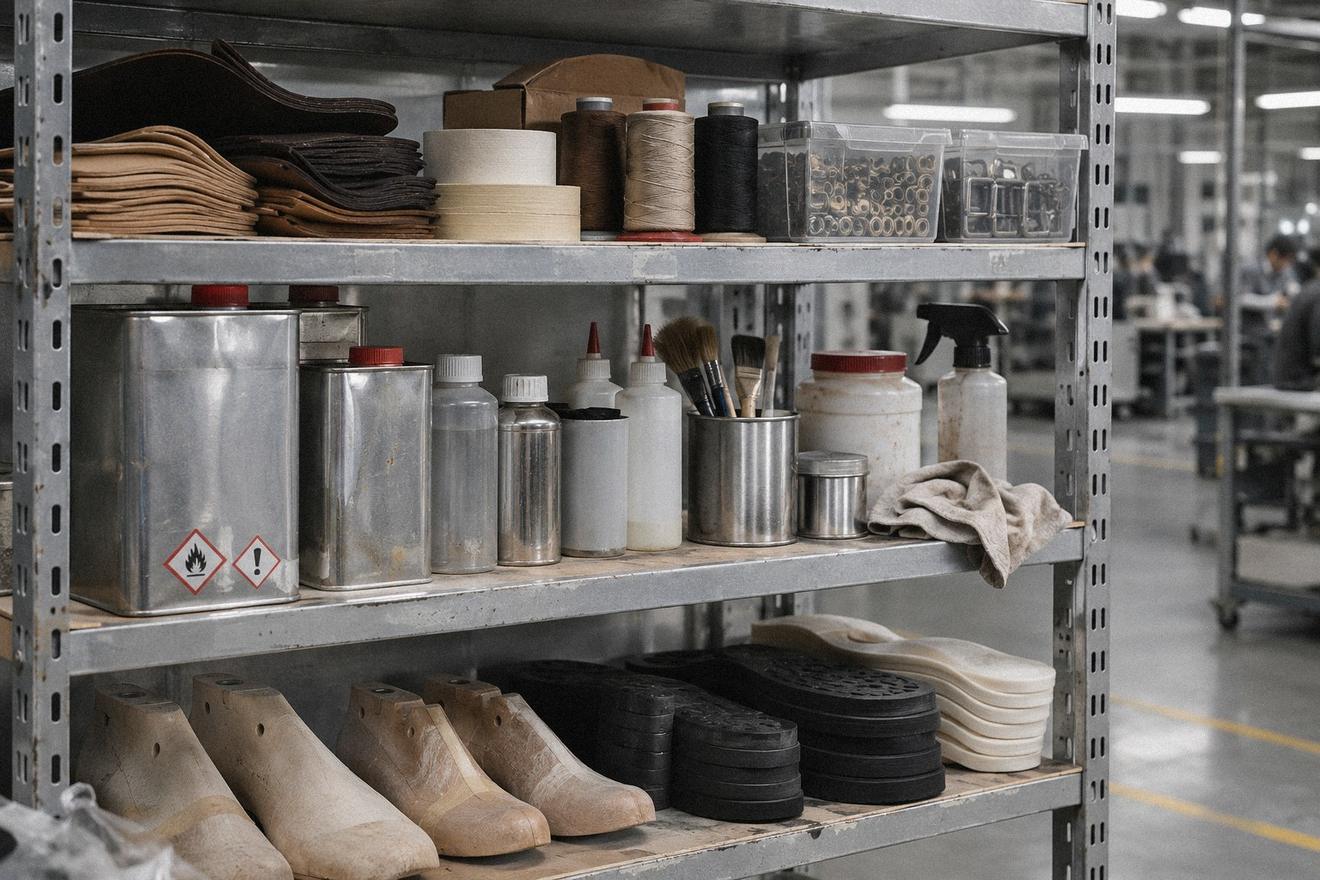
Controlled use, defined requirements.
The adhesives, dyes, finishing agents and other chemical inputs used in shoemaking demand careful management, for the sake of worker safety, product compliance and the environment.
The selection, storage and use of chemical materials are governed by the relevant safety requirements and the conditions applicable in the product's target market.
Chemical compliance
The compliance of materials and chemicals used in our products is ensured in line with the regulations of the relevant market and the partner's technical specification.
All materials are tested for carcinogenic substances at independent laboratories, whether or not the partner requests it; test methods and acceptance limits are set out on the Quality Control page.
For production destined for the European Union, we comply with the applicable obligations of Regulation (EC) No 1907/2006 on REACH (Registration, Evaluation, Authorisation and Restriction of Chemicals).
Supplier declarations, safety data sheets and conformity documents are reviewed according to product or project requirements.
Restricted substances
Where our partners maintain their own restricted substances lists (RSL), these requirements are incorporated into the technical specification at the start of the project.
The relevant chemical restrictions are applied in material selection and procurement. Where necessary, additional compliance checks are carried out through supplier documentation or independent laboratory testing.
Safe storage & handling
The storage, labelling and use of chemical substances comply with occupational health and safety requirements.
Exposure risks for staff working with chemicals are assessed, and the necessary ventilation, personal protective equipment and safe-handling measures are put in place.
Employees are informed about the properties of the substances they use and how to handle them safely.
Preserving the value of resources.
Shoemaking calls for the careful use of both natural and industrial materials.
We do not treat environmental protection as separate from production; we consider it at every stage, from material use to energy, water and packaging. Reducing material loss, using resources efficiently and minimising the environmental impact of our operations are the core elements of this approach.
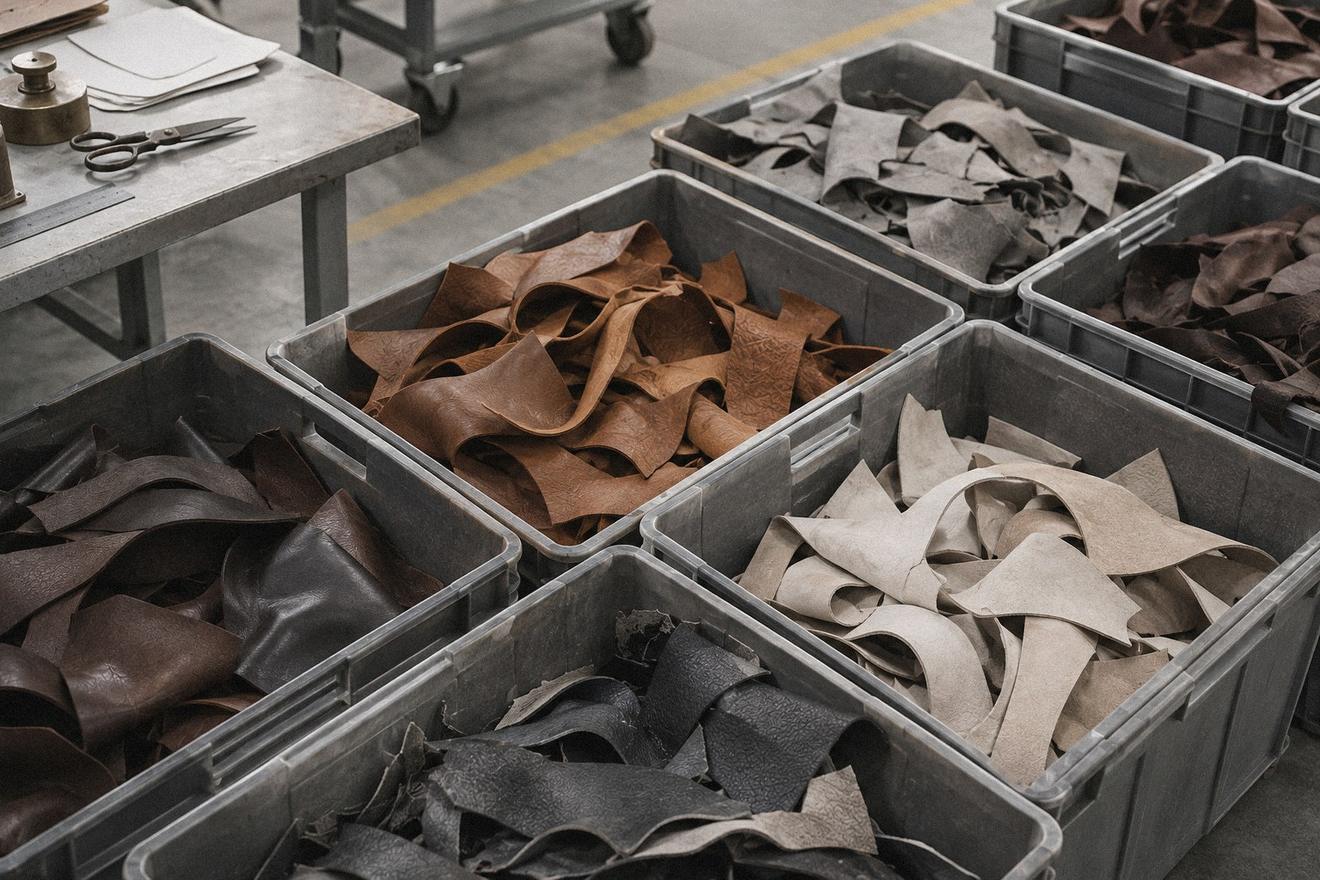
Material efficiency
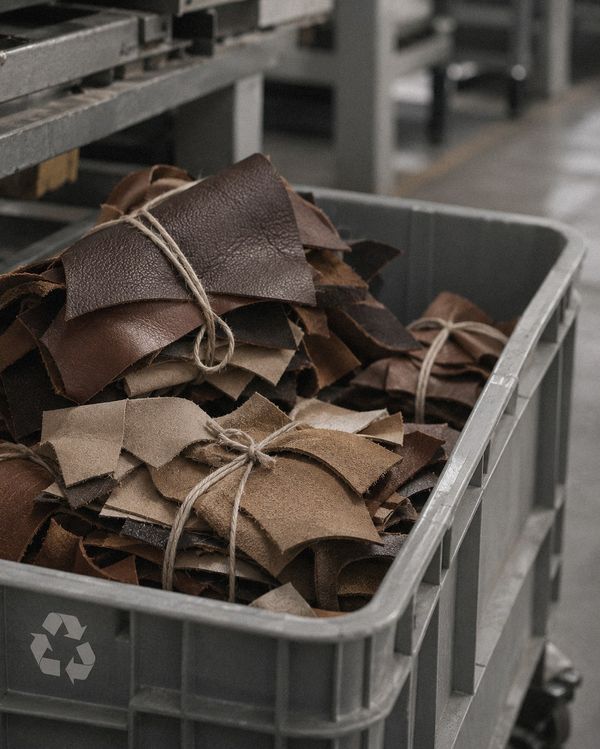
Every piece has value.
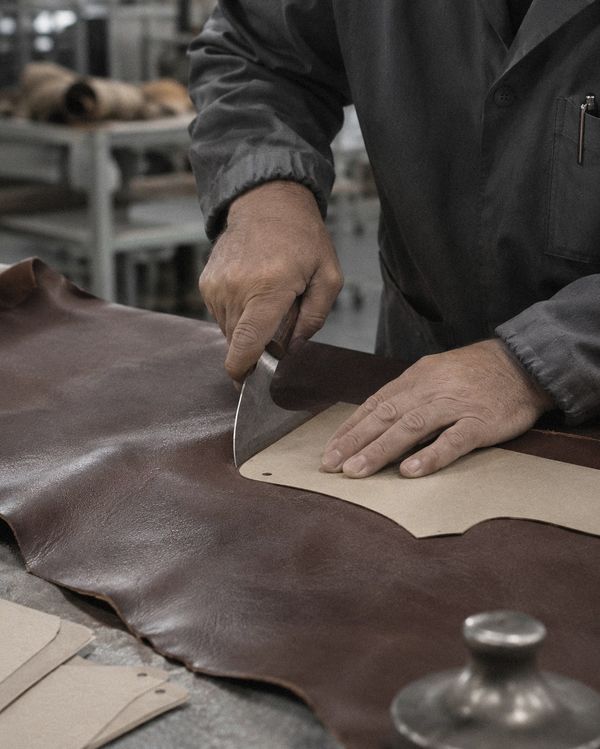
Being a natural material, leather varies in surface and usable properties from one hide to the next. Before cutting, the usable area of the hide, its surface variations and the component requirements of the model are assessed together.
Cutting is planned to use the material with minimal waste while maintaining the technical and visual requirements of the product.
Energy & water use
Equipment maintenance, lighting systems and production organisation are planned with energy efficiency in mind. Water use takes into account the full needs of both production areas and employee facilities.
Decisions to improve resource use are based on measurable data.
Emissions & environmental performance
When assessing environmental impact, we keep a clear distinction between measured results and future targets.
Reduction targets in areas such as energy consumption and carbon emissions must be built on defined measurement methods and verifiable data. We do not present environmental results that have not yet been measured or verified as achieved performance.
Packaging & material choices
Packaging options are determined by considering product protection, brand requirements and the conditions of the relevant market together. In private-label projects, packaging materials and applications are prepared according to the technical requirements of the order.
Where practicable, recyclable materials are preferred and unnecessary packaging components are reduced.
Product life & repairability
The lifespan of a shoe depends on its materials, construction method, care and manner of use. During product development, the model's intended use and technical performance expectations are assessed.
For models whose construction allows it, repair and resoling can be offered in line with the requirements of the construction concerned. We hold that any technical claim about product durability must be supported by the relevant test and performance results.
Trust is the foundation of how we do business.
Long-term business relationships grow as much from commercial responsibility, transparency and mutual trust as from manufacturing capability.
We conduct our business relationships in accordance with applicable legislation, contractual obligations and our corporate ethics principles. These principles apply equally to our own operations and to the professional relationships we build with our partners.
Anti-bribery & anti-corruption
We have zero tolerance for bribery, corruption, trading in influence or any similar practice intended to unlawfully influence business decisions.
All dealings with public authorities and private-sector organisations comply with the law, and business decisions are made on legitimate grounds.
Confidentiality & trade secrets
Designs, lasts and patterns, samples, technical specifications and commercial information belonging to our partners are used solely within the scope of the relevant collaboration.
This information is protected under our confidentiality principle; it is never shared with third parties or used in other projects.
Respect for intellectual property
We respect trademark, design and other industrial property rights. Protecting the product and design identity of our partners is a fundamental requirement of our private-label manufacturing.
We protect our own trademark rights in the same way, through the relevant national and international registration systems.
Protection of personal data
Personal data relating to employees, business partners and visitors is processed in accordance with Law No. 6698 on the Protection of Personal Data (KVKK).
Personal data is used only for specified purposes, and technical and organisational measures are in place to protect it.
Fair competition
We compete on the quality of our products, the strength of our manufacturing capabilities and the professionalism of our service.
Anti-competitive agreements, unlawful exchanges of information and unfair commercial practices are not accepted.
Tax & social security compliance
Our tax and social security obligations are met in full and on time, as can be verified through official records and documentation.
Principles gain meaning through practice.
Corporate commitments are sustained only when they are reflected in day-to-day operations and their results are reviewed.
We apply our responsibility principles in line with the relevant legislation, the requirements of our quality management system and the expectations of our business partners.
Management responsibility
Responsibilities for working conditions, occupational health and safety, quality management, environmental practices and business ethics are carried out within clearly defined internal roles and authorities, under the oversight of senior management.
Non-conformities & corrective action
Non-conformities identified in our operations are examined according to their nature, and the necessary corrective actions are taken.
The root causes of recurring or systemic issues are investigated, and improvements are made to prevent similar situations.
Reporting & feedback
Our employees, suppliers, business partners and other stakeholders may report to the company any situation they believe to be contrary to the principles set out on this page.
Reports made in good faith are reviewed confidentially, and no one who makes such a report will suffer any adverse treatment as a result.
Continuous improvement
Production methods, material technologies and regulatory requirements evolve over time. We regularly review our working conditions and operational practices in light of these changes.
The knowledge and experience gained in quality management, employee safety, procurement and environmental practices form the basis of our improvement work.
The certificates and principles behind our commitments.
Our operations are underpinned by our quality management system, compliance with environmental legislation, laboratory testing and legal compliance work.
ISO 9001:2015
Quality Management System
Environmental Certificate
Certificate demonstrating compliance with environmental legislation
REACH
Applicable chemical obligations under Regulation (EC) No 1907/2006 of the European Union (REACH)
Testing for carcinogenic substances
Material testing at EKOTEKS, an independent laboratory and IHKIB affiliate, and at the TASEV laboratory affiliated with TASD
Platinum Certificate
Certificate of compliance with tax and social security obligations
ILO fundamental principles
The fundamental principles and rights at work set out by the International Labour Organization
Responsibility demands continuity.
The safety of our people, the considered use of materials, the efficient use of resources and the ethical principles that govern our business relationships are integral to the way we make shoes.
We continue to develop these principles in line with applicable requirements and the experience we gain.
Reports & document requests
Reports, questions and document requests concerning our responsibility commitments can be sent to etor@etor.com.tr by e-mail.