Heritage
1988 — todayETOR was founded in 1988 as a small workshop in Gedikpasa, one of Istanbul's long-established footwear manufacturing districts, by two brothers and their childhood friend. The partnership behind the company is written into its name: ETOR combines the founders' surnames, Etem and Oruc.
Gedikpasa is a district where, for generations, shoes have been cut and stitched by hand and the trade has been learned at the bench. We have never left the address where our first pairs were made. As production moved first to Merter and later to Ikitelli, our door in Gedikpasa remained open; the showroom where we present our collections and receive our partners stands at that same address today. The place where a history of nearly forty years began is the place where we welcome our guests now. The company remains under the management of the founding families, with the second generation actively involved, having learned the craft alongside the founders.
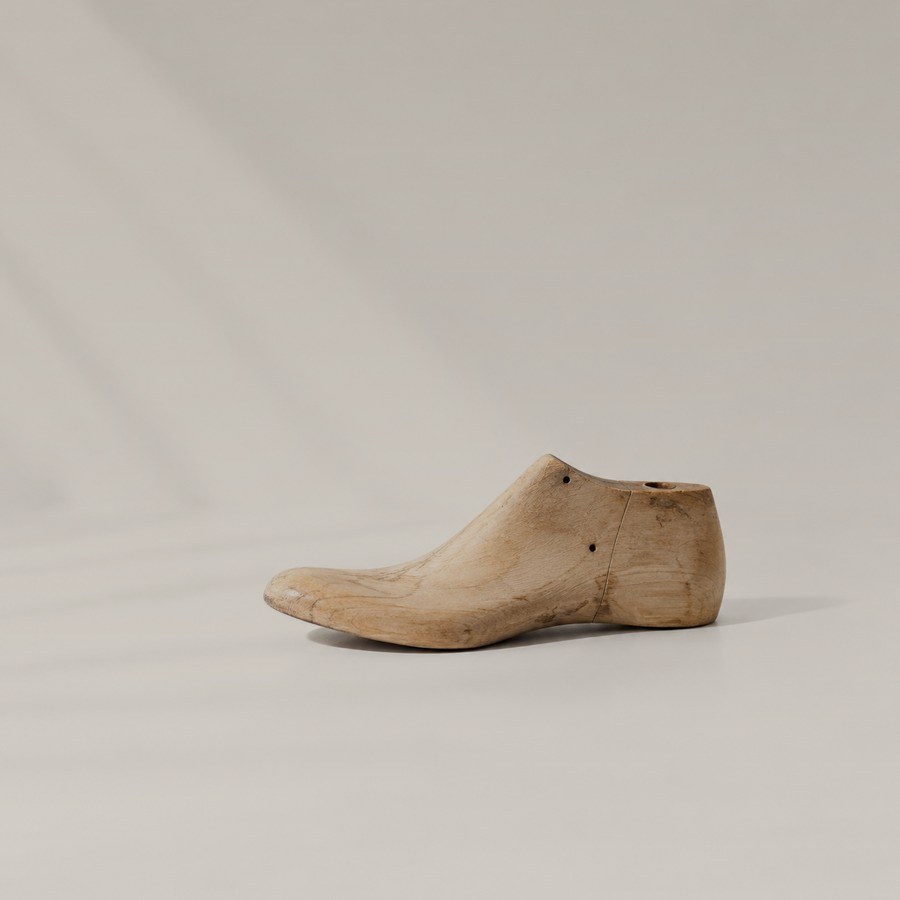
Since our founding, our approach to manufacturing has been grounded in our relationship with leather. As a natural material, leather differs from hide to hide in grain, flexibility and character. Understanding these qualities means assessing a material not only by its appearance, but by its structure, its behaviour and its intended use. A shoe's character is shaped by the choice of material; its quality is defined by the last, the construction, the workmanship and its performance over a lifetime of wear. To us, craftsmanship lies less in imposing on the nature of a material than in reading correctly what it has to offer, and carrying that knowledge through every stage of production.
The craft knowledge built in Gedikpasa took on a new dimension as ETOR opened up to international markets. In the early 1990s we began exhibiting at footwear fairs across Europe, and the trading relationships formed there saw our entire output directed to export for many years. Manufacturing to the collection calendars, sizing systems, material preferences and technical specifications of different countries became, over time, a defining influence on the way we work. The experience gained in markets stretching from Europe to Central Asia and from the Middle East to the Americas did more than broaden our commercial reach; it shaped a technical organisation capable of meeting the design philosophies and production expectations of a wide range of brands.
That heritage underpins the manufacturing we carry out today at our integrated facility in Ikitelli. Alongside developing our own women's and men's collections, we manufacture for leading Turkish brands, for international brands and for retail chains abroad, each in line with its own brand identity. As relationships that began in different markets matured into long-term supply partnerships, our production methods, technologies and fields of activity continued to evolve. Through all of these changes, our care for materials, our commitment to craftsmanship and our respect for the distinct character of every model have remained constant.
The journey
From Gedikpasa to Ikitelli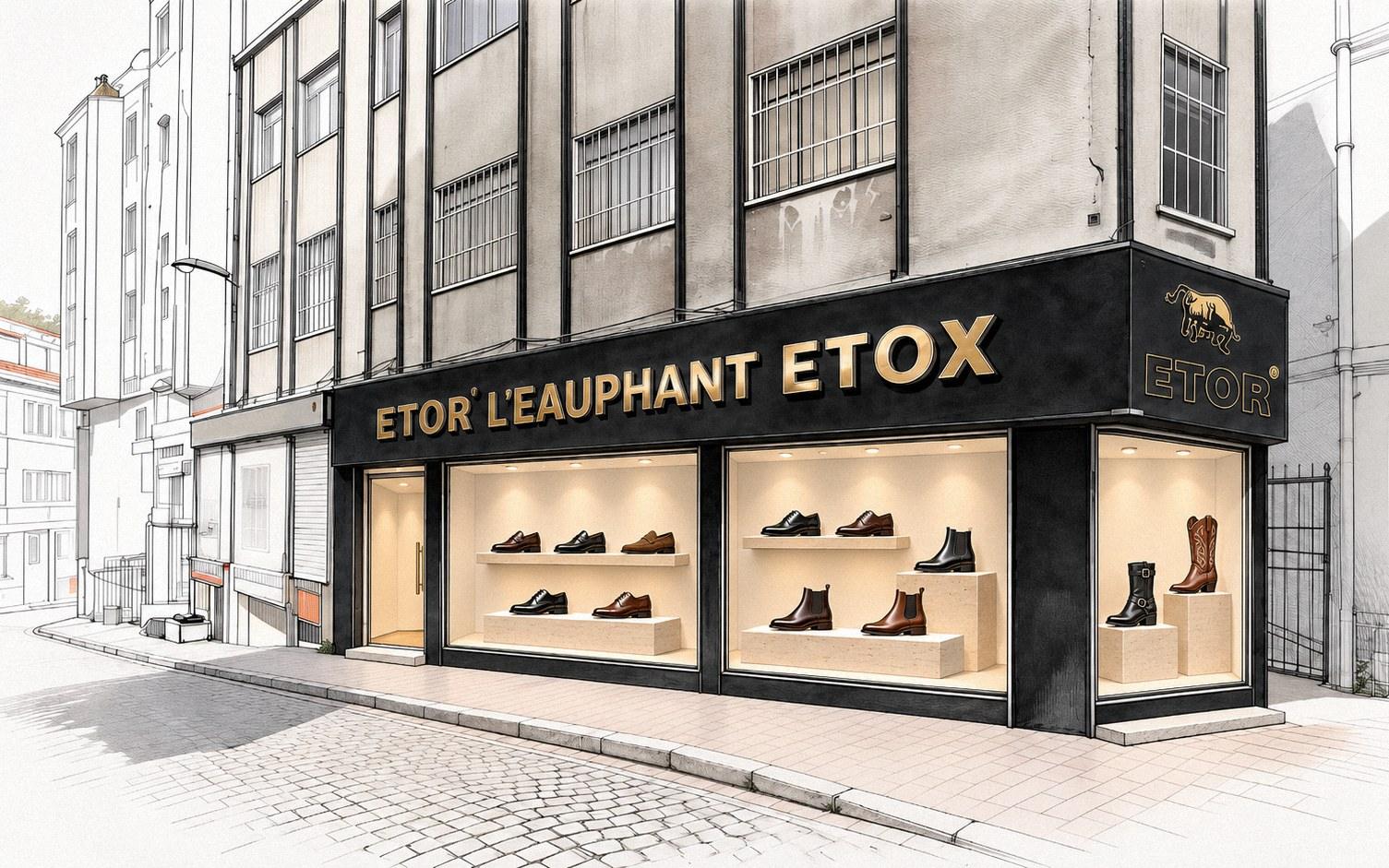
It all began in 1988 in the basement of a small building in Gedikpasa, a historic heart of Istanbul's shoemaking tradition, with a team of 8–10 people. In this workshop, where leatherwork was learned through daily practice, the first pairs were cut, stitched and lasted. At every stage of production, first-hand experience laid the foundations of an expertise grounded in a deep understanding of materials and command of traditional shoemaking techniques.
The early years in Gedikpasa were the period in which the company's approach to craftsmanship took shape, as much as the years in which production began. The knowledge of materials and practical skill developed in a small workshop became the starting point for the wider manufacturing activity that followed. The shop opened in Gedikpasa on 4 April 1988 was the first address at which ETOR's products met buyers directly. Although production later moved to other facilities, Gedikpasa never lost its place in the company's activities; it continues to serve the same role today, as the showroom where collections are presented and meetings with partners take place.
In 1992, production expanded with a second, 800 m² workshop in Merter. While Gedikpasa continued as the showroom, a substantial share of production moved to the new site. With a team of 60–70 and a daily capacity of 750–800 pairs, the Merter workshop was a key step in ETOR's transition to higher-volume manufacturing.
This growth in capacity went hand in hand with ETOR's first steps into international markets. In the same period, the company began exhibiting at international footwear fairs, notably in Italy, Germany, the United Kingdom and Russia, presenting its collections to industry professionals and buyers from many countries and laying the foundations of its international trade relationships.
The opening of the Ikitelli factory in 1998 began a new chapter in ETOR's manufacturing. Planned with the Italian engineer Enrico Motta and equipped with machinery sourced from Italy, the plant brought cutting, closing, lasting and finishing together under one roof. Its layout was designed around the flow of work between production stages and the positioning of each machine. Integrated production meant every stage could be coordinated from a single centre, production planning became more cohesive and process control more systematic. Beyond capacity, it was a defining step in the development of ETOR's technical organisation and process expertise.
This industrial transformation went hand in hand with a broadening of ETOR's commercial activities. While continuing to exhibit at international fairs, the company also gained experience in projects built on specific technical specifications and institutional production requirements. This work allowed it to adapt its manufacturing know-how to new end uses, product characteristics and defined technical criteria. International bilateral business meetings coordinated by ITKIB (Istanbul Textile and Apparel Exporters' Associations) brought direct contact with industry representatives in other markets, a forum to assess mutual production and supply expectations, and new trade relationships. The stronger manufacturing base in Ikitelli thus enabled ETOR to widen its scope in both institutional production projects and international trade.
Today, ETOR operates from a 6,000 m² integrated manufacturing facility in Ikitelli, Istanbul, with more than 150 employees and a daily capacity of 2,000 pairs. Alongside developing and producing its own women's and men's collections, the company supplies footwear to leading companies in Turkiye and abroad, to international brands and to retail chains overseas. With cutting, closing, lasting and finishing all performed on one site, the operation unites the experience of traditional shoemaking with modern manufacturing methods.
For its first twenty years, ETOR produced men's footwear; in 2008 it moved into women's footwear, and its first women's collection, launched in European markets in the middle of the year, drew orders well beyond expectations. From its founding until 2014, ETOR directed its entire output to export and operated solely in international markets. From 2014 onwards, in response to global economic crises and shifting market conditions, the company also began supplying the Turkish domestic market. This shift carried the manufacturing experience gained through international business relationships into partnerships with companies in Turkiye. Today, ETOR maintains its domestic and international supply relationships side by side, as two complementary areas of its business.
“Learned through tradition, knowledge endures through making.”
A culture of making
Craftsmanship · Manufacturing · ResponsibilityThree pillars shape our culture of making: craftsmanship, manufacturing and responsibility.
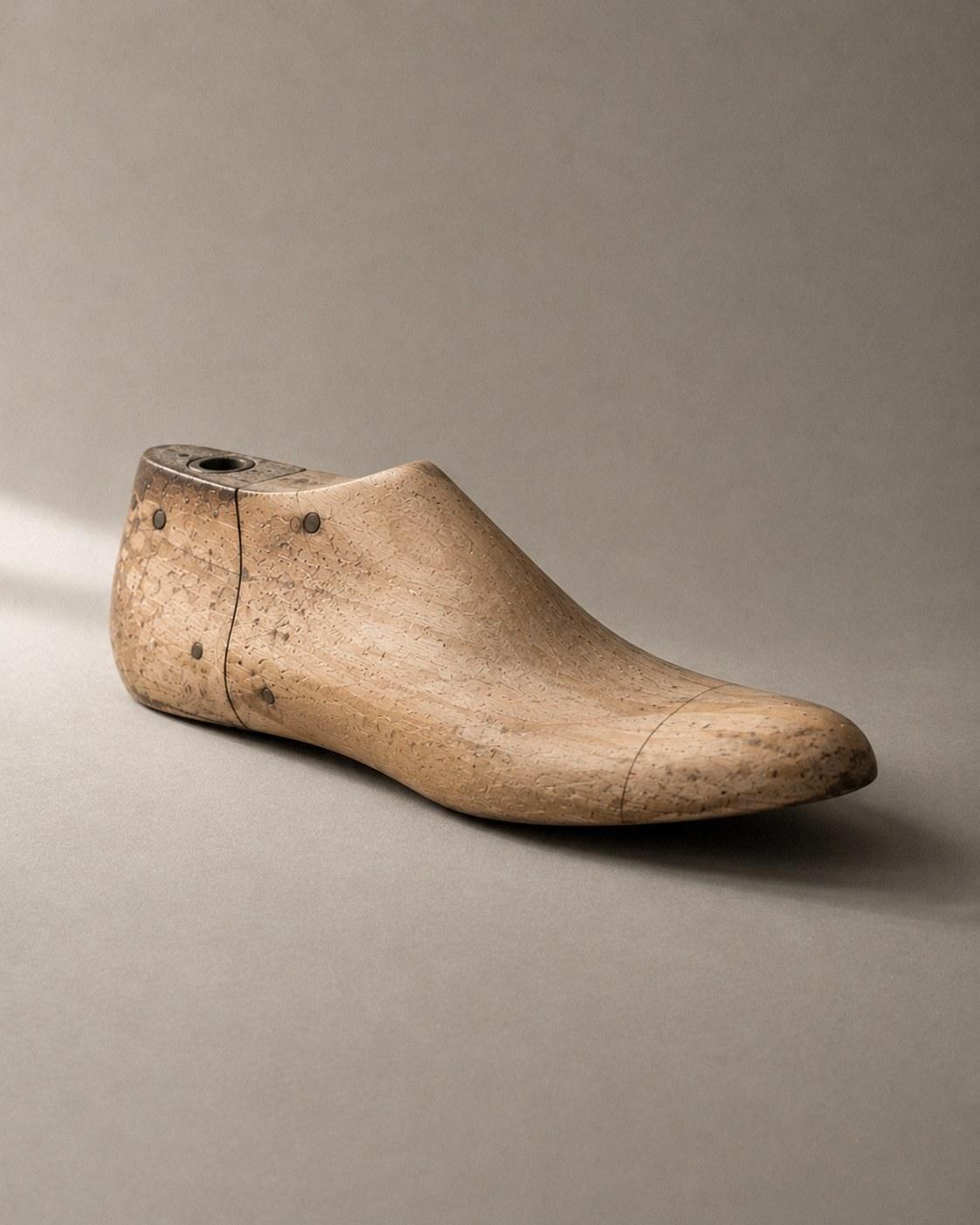
Where knowledge becomes mastery
Footwear manufacturing demands expertise that begins with understanding the material and deepens with experience. To us, craftsmanship goes beyond being able to do the work: it means knowing why and how it should be done, refining that knowledge and passing it on to the next generation.
Read more
Every hide is different.
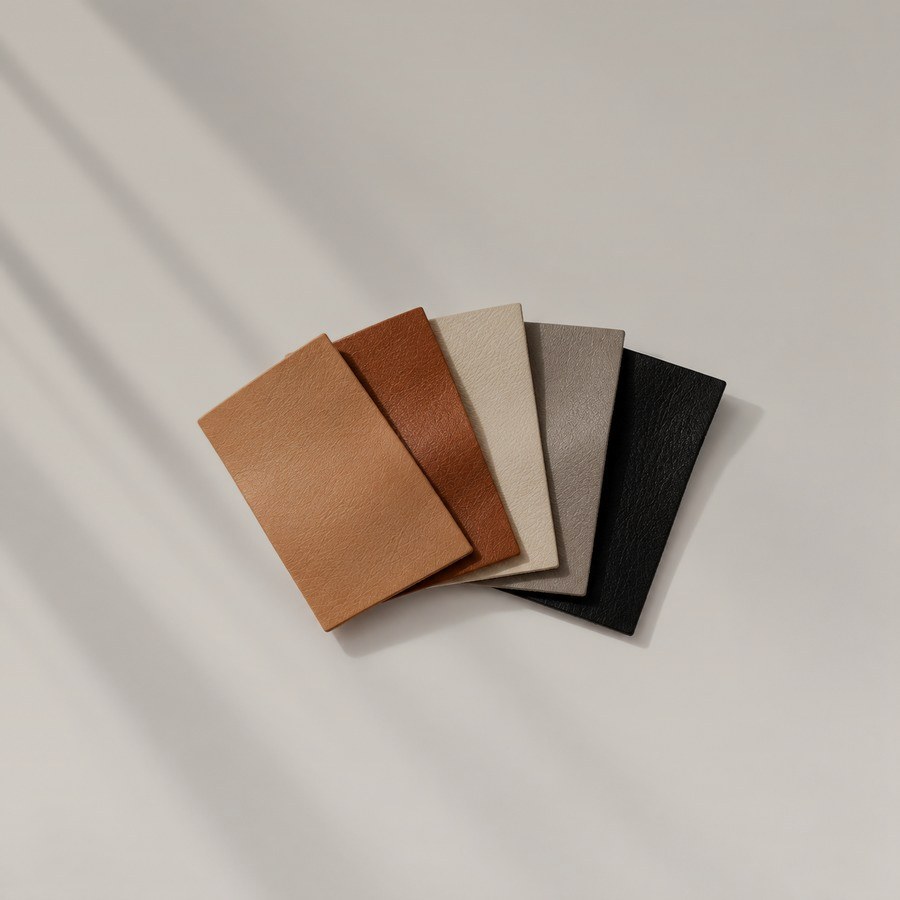
The grain, thickness and direction of stretch of each hide are assessed together with the intended use of the model and the requirements of its construction. Choosing the right material is as much a technical decision as an aesthetic one; it determines the shoe's form, its structural integrity and its performance in wear. Knowledge of leather built up over the years guides every decision from the start of production to its final stage.
Experience endures when it is shared.
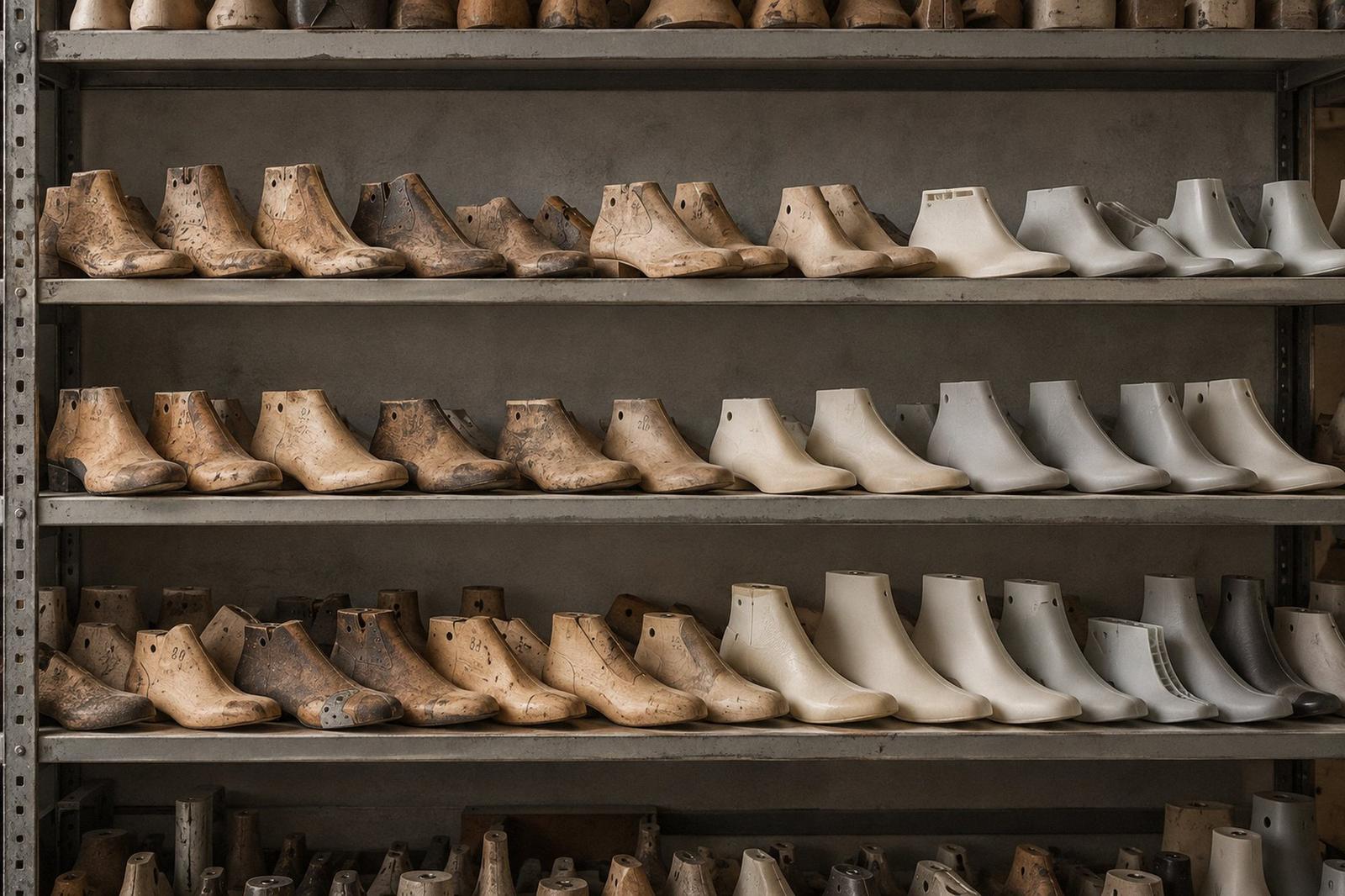
The production knowledge that grew through daily practice in our first workshop in Gedikpasa lives on today in the work of our experienced teams. Setting the right cutting direction for each hide, preparing the upper components, achieving the correct tension during lasting and carrying out the finishing operations all call for judgement grounded in experience as well as technical method.
This knowledge is passed on in practice: every new team member is trained alongside an experienced colleague in their own department. In this way, craftsmanship extends beyond individual experience and becomes a lasting part of our manufacturing culture.
Traditional skill, modern precision.
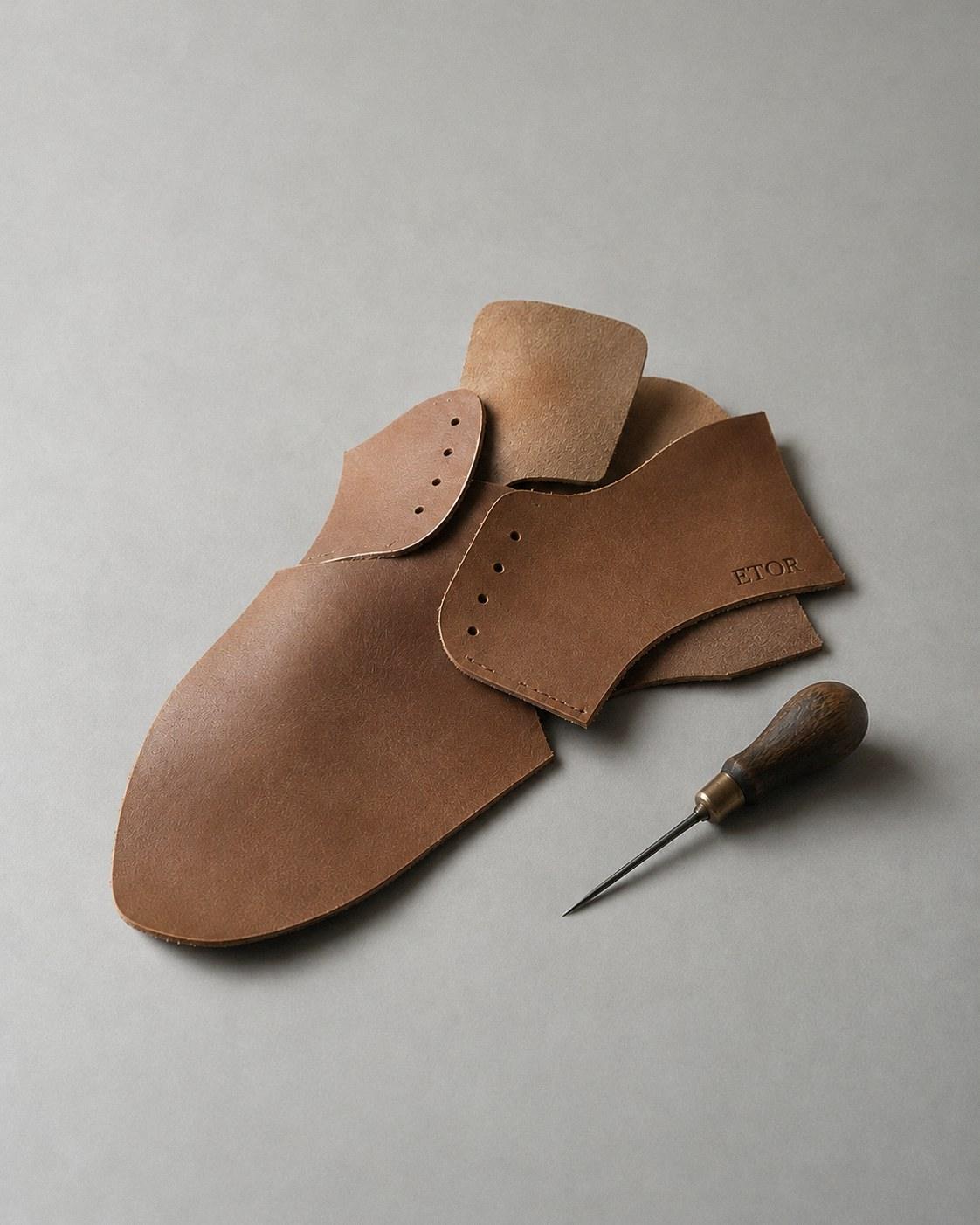
Advances in manufacturing technology have redefined the role of traditional shoemaking. Today, operations that demand dimensional consistency and repeatability run on modern machinery, while at the stages most sensitive to the character of the material, skilled handwork remains indispensable.
In Western boot making, the model-specific cutting, decorative stitching and shaping techniques make this a speciality in which the partnership between hand and machine is most evident. We see craftsmanship not as an alternative to technology, but as a value that evolves alongside it.
From our own collections to private label
At our integrated facility in Ikitelli we manufacture in two areas: collections for our own brands, and private-label production for our partners. Both are made on the same lines, to the same technical discipline.
Read more
Years of producing exclusively for export markets shaped the way we work. Maintaining the same quality from the first pair to the last on high-volume orders, adhering to the approved sample and technical specification, and meeting delivery dates are principles we acquired in that period and apply to every order today.
Our production spans more than thirty product categories across women's and men's footwear, from casual styles and classic shoes to sandals, boots and tall boots. Different product categories and collections are developed and manufactured within the same production infrastructure, with the technical requirements, material properties and production method of each model assessed on their own terms. The full range of product categories and technical options is set out on the Product Development & Manufacturing page.
ETOR · ETOX · L’EAUPHANT · Donna Barbara · Senior Legatee · Margho · ETORO · Sergio Puccini · Dr.ETOR
Designed, patterned and manufactured entirely in-house, our own collections bring distinct product philosophies together on a shared foundation of manufacturing expertise. Every one of our brands is present in all the markets we serve.
- ETOR · ETOX · ETORO
- Predominantly men's · Premium
A broad range of styles, from classic to casual.
- L’EAUPHANT
- Women's · Premium
Refined designs and high-end product lines.
- Donna Barbara
- Women's
Styles for every occasion, from casual to dressy.
- Margho
- Women's & men's · Predominantly women's
A versatile collection of women's and men's styles across every look.
- Senior Legatee · Sergio Puccini
- Men's · Premium
Refined designs and high-end product lines.
- Dr.ETOR
- Predominantly men's
Military-inspired combat boots, boots and lace-up ankle boots.
Each brand's identity, honoured in production.
We supply footwear to leading companies in Turkiye as well as to established brands operating in other countries and to retail chains abroad. We develop and produce our partners' collections to reflect each brand's own design language, material preferences and technical requirements.
This work is carried out on the basis of approved samples and mutually agreed production terms. Allowing every project to retain its own identity while drawing on our manufacturing experience is the foundation of our partnership model.
Beyond manufacturing
A manufacturer is defined as much by the standards, the working culture and the sense of responsibility with which it makes its products as by the products themselves. Quality management, respect for our partners, the work of our people and environmental responsibility are inseparable from our day-to-day production.
Quality does not begin at the final inspection.
Our approach to quality rests on an end-to-end process, from incoming material inspection to final inspection. The technical suitability of leathers, soles, linings and trims is verified before production, and conformity with the model's approved specifications is monitored through checks at defined stages of manufacturing. Regardless of partner requirements, every material we use is tested for carcinogenic substances at EKOTEKS, an independent laboratory and IHKIB affiliate, and at the laboratory of TASEV (Turkish Footwear Industry Foundation of Research, Development and Education), affiliated with TASD (Footwear Industrialists Association of Turkiye).
Our work within the framework of an ISO 9001:2015 quality management system ensures that our processes are clearly defined and traceable.
Every partnership begins with mutual trust.
Manufacturing for brands in Turkiye and abroad demands commercial responsibility as much as technical competence. Our partners' designs, lasts, technical files, samples and development work form part of each brand's proprietary know-how.
This information and work are protected under strict confidentiality: they are never shared between projects or made available to other brands.
People are at the heart of production.
The quality of a shoe depends as much on the knowledge of the people who run the technology and work the material as on the technology itself. For our team of more than 150 people, we regard occupational health and safety, respect for employee rights and professional development as core elements of responsible manufacturing.
Responsibility to our resources and to the future.
We manage material use and chemical compliance in line with our Environmental Certificate and applicable regulations. We regard environmental responsibility not as a one-off target, but as a matter continuously reviewed within our processes.
Our manufacturing is supported by a range of certifications and corporate memberships covering quality management, environmental practice and industry collaboration.
Global network
Many markets, one way of making.International markets shaped the way we manufacture from the very beginning. For more than twenty-five years, from 1988 to 2014, every pair that left our workshop and our factory was made for a buyer abroad; the expectations of those markets set both our standards and the way we work.
The first steps were taken in the early 1990s at footwear fairs in Italy, Germany, the United Kingdom and Russia. Since then we have exhibited at more than 200 international fairs. From Dusseldorf to Moscow and from Dubai to Las Vegas, these encounters are where many of our enduring business relationships began.
Over that time, our products have reached 81 countries. We have supplied footwear to established brands and retail chains from Europe to Central Asia and from the Middle East to North America. In 2008, we introduced our first women's collection to European markets, extending our offer to international buyers beyond men's footwear. The ETOR trademark has been registered in 45 countries; today 60% of our total production is exported, and we operate on a regular basis in 24 countries.
Every market has its own product expectations, collection calendars and technical requirements. Years of working with buyers from dozens of countries have taught us to adapt our manufacturing processes to those expectations; the flexible, meticulous approach we bring to working with different brands grew out of that experience.
Europe
GermanyAlbania
Belarus
United Kingdom
Bulgaria
Estonia
Latvia
Lithuania
Romania
Russia
Slovakia
Slovenia
Ukraine
Greece
Caucasus
AzerbaijanGeorgia
Central Asia
KazakhstanKyrgyzstan
Uzbekistan
Tajikistan
Turkmenistan
Middle East
United ArabEmirates
Syria
Americas
United Statesof America
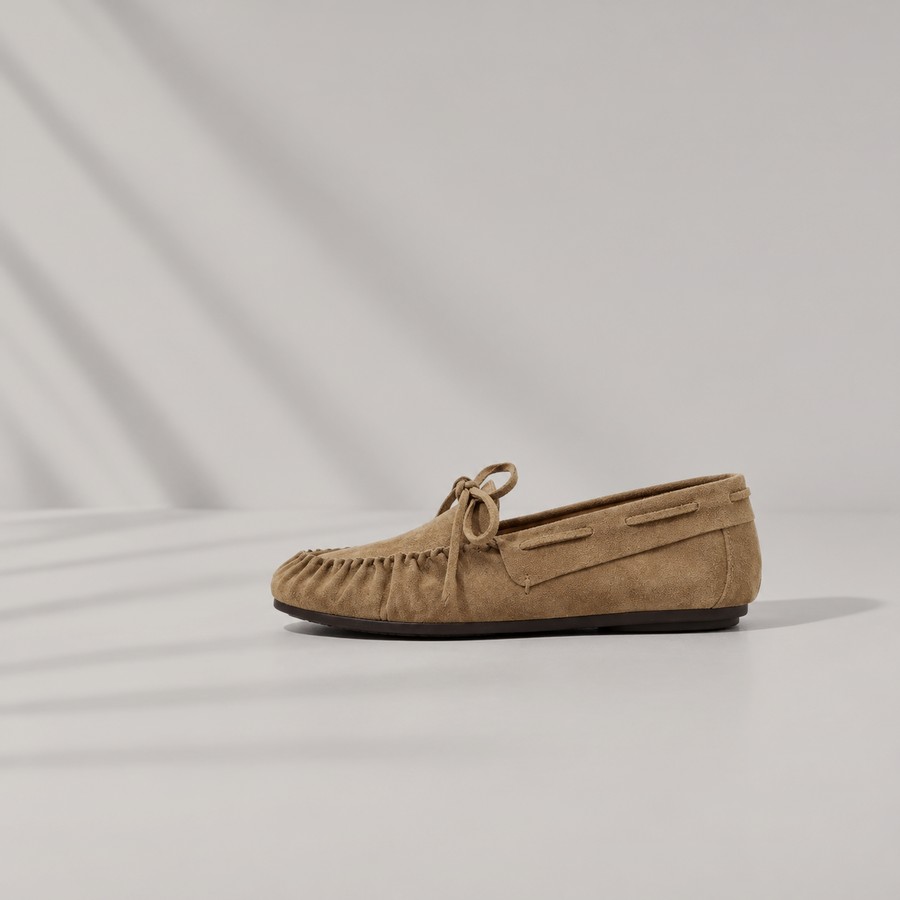
From past to future, with the same care.
Our Story, which began in Gedikpasa in 1988, continues today through new collections, evolving production methods and partners across many regions.
We would be glad to continue this story with you where it began, at our showroom in Gedikpasa.