Experience
Since 1988Shoemaking is never simply a matter of completing a design and turning it into a product. Every collection finds its place within the expectations of different markets, shifting consumer habits, commercial relationships and production realities. The industry expertise ETOR has built over the years was shaped within this wider landscape. The technical experience gained in manufacturing, the relationships established across different countries and our work with the industry's various institutions have become complementary dimensions of what we do.
Over time, our presence in international markets came to mean far more than building new commercial connections. Understanding first-hand how collections are conceived, what is expected of a product and how business is done in different countries has also informed our production decisions. Seeing conversations that began at industry gatherings grow into long-term business relationships has underlined the importance of mutual trust, technical alignment and continuity in production.
This experience has also shaped ETOR's identity as a supplier, both in Turkiye and in international markets. Working with brands and retailers of different sizes requires understanding each partner's particular expectations and meeting them within a shared production discipline. Projects built around institutional needs and defined technical requirements have, in turn, allowed our manufacturing know-how to be applied in new fields.
Today, we see our industry activities not as a series of separate engagements, but as the continuity of relationships and experience developed over many years. Spanning everything from our international contacts to our commercial partnerships, this expertise defines ETOR's place in the footwear industry and its connection to a wide range of fields.
- 200+
- International trade fairs attended
- 21
- Countries exhibited in
- 2
- Bilateral business meeting programmes
- 81
- Countries exported to since 1988
- 40%
- Domestic share of production
International trade fairs
From trade fairs to lasting partnershipsWhen we began showing our collections at international trade fairs in the early 1990s, these meetings also marked the start of ETOR's first commercial relationships in new markets. Beginning with Italy, Germany, the United Kingdom and Russia, our trade fair presence gradually extended to other countries. While presenting our own collections to buyers, we also gained first-hand insight into the design sensibilities, material preferences and evolving expectations of different markets.
Over the years, we returned to the same fairs and met again with buyers we already knew. Some of those first conversations grew into long-standing partnerships, while other relationships continued to develop through new collections and work in new markets. For us, trade fairs became more than venues for showing our products: they became meeting points where our business relationships deepened over time.
The relationships formed at these fairs went on to support the growth of our manufacturing partnerships with brands and retailers in different countries. The market knowledge gained through trade fairs and the commercial contacts built up over the years remain an important part of our activities in the international footwear industry today.
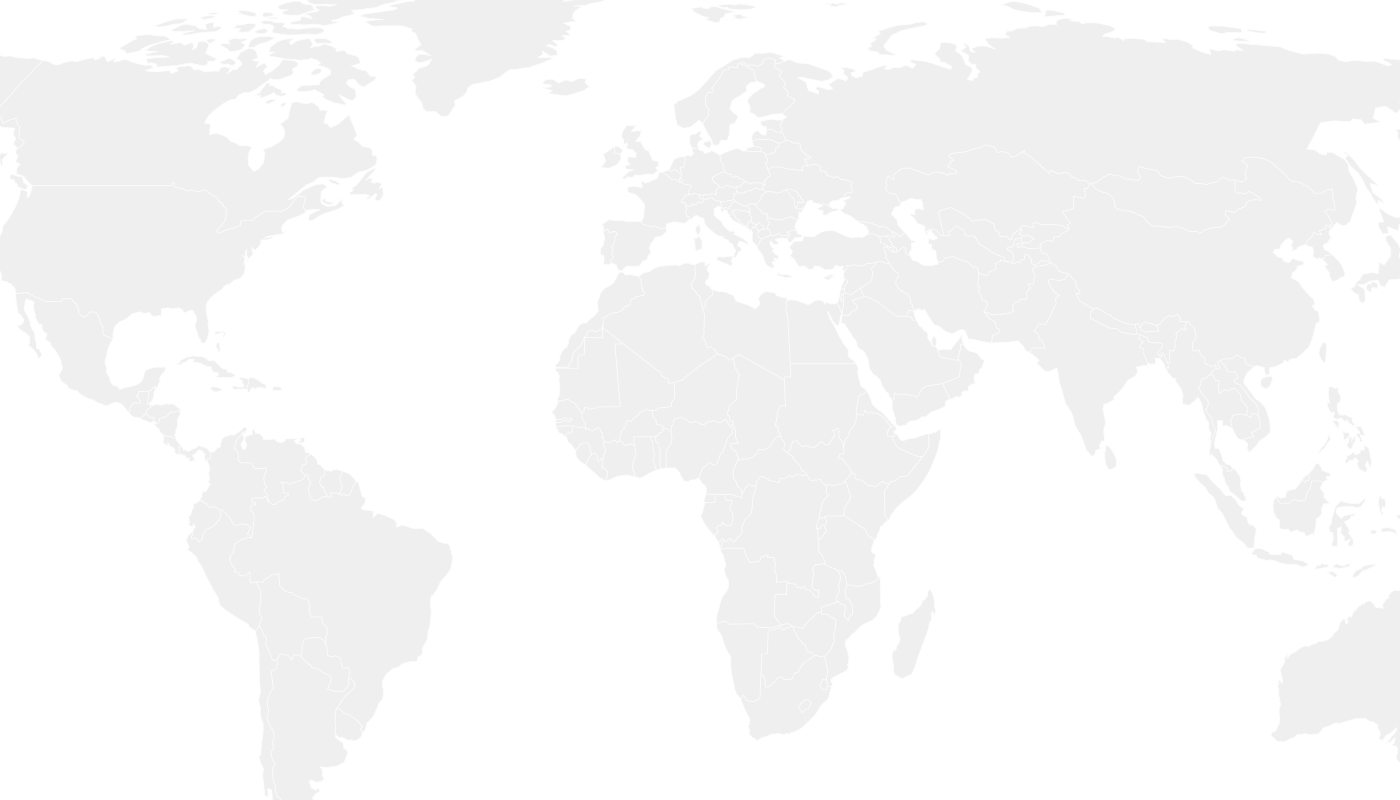
Hover over a fair · the city is highlighted on the map
AYMOD, the international meeting point of the Turkish footwear industry, is the fair where we welcome overseas buyers in our own city.
Our participation in European trade fairs gave us close insight into collection expectations across different markets and helped us develop our professional relationships in the region. GDS and Vateva are no longer held; our participation dates from the years these fairs took place.
Italy's trade fairs are where the new season in footwear and leather is first unveiled; this is where we followed developments in materials and trends.
Industry events in Central Europe and the Balkans have given us direct contact with the region's footwear and leather sector and a closer view of product expectations in these markets.
Industry events in the Baltics and Eastern Europe have allowed us to assess product preferences in regional markets and to develop our commercial connections in the footwear sector.
Exhibiting in North Africa allowed us to observe commercial relationships and product expectations in the regional market first-hand.
Trade fairs in the Middle East and Asia have given us close insight into diverse consumer markets, product categories and international supply relationships.
Our trade fair presence in North America has brought us together with buyers and industry professionals of every scale from across the international footwear sector.
Bilateral business meetings
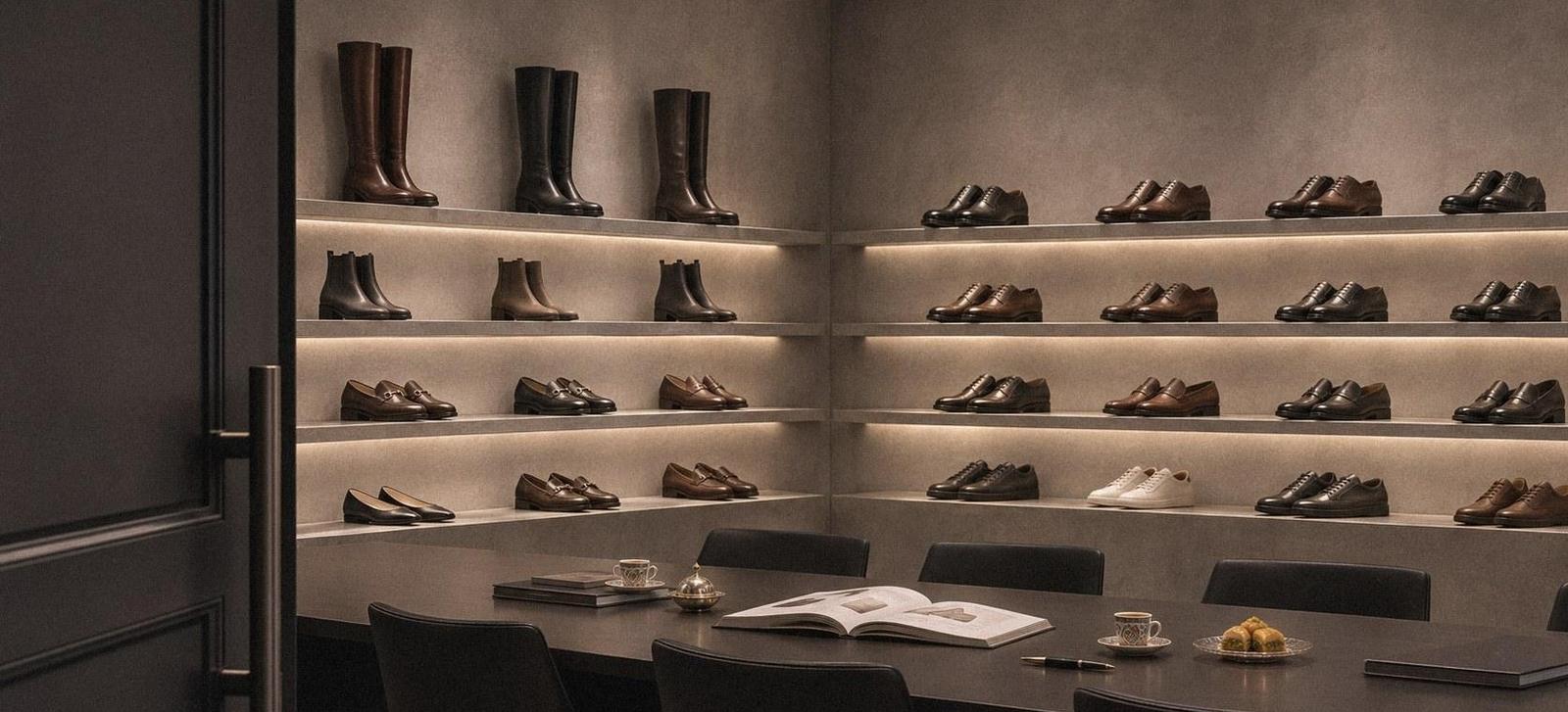
Direct contact, mutual assessmentIn international trade, a new business relationship depends on bringing the expectations of manufacturer and buyer together under the right conditions. Bilateral business meeting programmes make this process more structured and focused. Meeting schedules, drawn up after a prior review of each participating company's field of activity, product categories and commercial needs, allow both sides to meet directly around a defined agenda.
Unlike the broad, open format of a trade fair, these meetings leave more time for the details of a potential collaboration. Collection development, production capacity, technical specifications, order quantities and delivery expectations are discussed on both sides. This makes it possible to assess not only the products, but also each company's way of working and how well the two are suited to one another.
At ETOR, we see our participation in these programmes, coordinated by the Istanbul Textile and Apparel Exporters' Associations (ITKIB), as an opportunity for more direct and meaningful discussions with international buyers. What matters most to us is that, at the very start of a business relationship, mutual expectations can be discussed openly and a potential manufacturing partnership can be assessed against concrete requirements.
In meetings with buyers and industry professionals from the American footwear sector, we presented our collections and manufacturing capabilities. Above all, these meetings gave us the opportunity to exchange views directly on the production conditions, product requirements and commercial expectations that brands weigh when selecting a supplier.
The programme in South Korea brought us together with representatives of the Asian footwear market and allowed us to take a close look at the needs of a different commercial environment. In our meetings, we discussed how our collections and manufacturing capabilities could align with buyer expectations in this market, as well as the scope of potential collaboration and working terms.
Commercial partnerships & supply
The responsibility behind a collectionFor a footwear collection to reach a large number of stores within the same season and to the same quality standard, a great deal of organisation is required behind the scenes of production. Every model has to be ready in the right sizes, in the agreed quantities and on the agreed dates. What is more, the hundreds and sometimes thousands of pairs that make up a collection are expected to be consistent not only in appearance, but also in fit, materials, workmanship and wear.
The supply relationships ETOR has developed over the years with international brands and major retailers have been shaped around this responsibility. Producing a brand's collection means more than turning its design into a physical product; it means becoming part of the promise of quality and delivery that the brand makes to its own customers. What sustains these relationships is not only the finished product, but the ability to maintain the same manufacturing reliability season after season.
Retail chains & international brands
Manufacturing for international retail chains means becoming part of a supply structure far wider than a single order. A collection may be routed to different countries, stores and distribution centres. Every detail, from product specifications to packaging and labelling, from shipment planning to the regulatory requirements of each market, is expected to fit within this structure. Even a seemingly minor discrepancy can affect a large number of products and the later stages of delivery.
Differences between markets make this responsibility even more pronounced. While sizing systems, product descriptions and distribution conditions differ between European markets such as Germany and the United Kingdom and the United States, collections for the Middle East and Central Asia may call for different products depending on climate, seasonality and patterns of use. Preparing the same model for more than one market goes well beyond changing the size label; it can require a combined assessment of requirements ranging from material properties to product information.
Working at this scale demands careful planning, traceability and adherence to defined quality criteria at every stage of production. Inspections carried out by independent inspection bodies appointed by buyers can also be an important part of this way of working. Years of meeting the supply requirements of different markets have strengthened ETOR's experience in managing large-scale collections, adapting to changing demands and maintaining continuity of production.
Being a supplier to an international brand means more than producing and delivering a set number of shoes. It means carrying a responsibility that begins anew every season, with the same reliability across different regions.
Brands & retail chains in Turkiye
Our work with major brands and retailers in the Turkish market, which began in 2014, has grown over time into a significant share of our production. Today, around 40% of our total output is destined for the domestic market. Our partners in Turkiye also include companies with extensive store networks that manage their collections within set seasonal calendars.
In these relationships, our production responsibility goes hand in hand with close collaboration throughout collection development. Many decisions lie between a model's initial design concept and its final form on the store shelf. Material selection, last development, sample evaluation and the move into bulk production are carried out without departing from the brand's distinctive product identity. Preparing collections for different brands in the same facility also requires that each brand's design, model and last data be kept separate, and that commercial confidentiality be protected as an integral part of the manufacturing relationship.
These partnerships, in Turkiye and in international markets, are where ETOR's manufacturing know-how meets the realities of business. More important than completing a single order on time is maintaining a way of working that allows the same partner to rely on us again for its next collection.
The technical scope of our collaboration models and the stages of production are covered in detail on the Product Development & Manufacturing page.
Production to technical specification
Defined requirements, measurable resultsNot every footwear project begins with a collection concept. In some production for institutional buyers and public bodies, the intended use of the product, its material properties, its construction and the quality conditions it must meet are set out in advance in technical specifications. In these projects, the manufacturer's responsibility is not simply to fulfil the defined requirements, but to assess whether they can be manufactured and to ensure they are met under the same conditions throughout bulk production.
ETOR has taken part in projects of this kind on several occasions. Unlike standard commercial collections, this work centres on the product's suitability for a specific use. Material selection, last and construction decisions, sampling and production methods are all assessed within the technical limits set by the relevant specification. What matters is less design freedom than the correct application of defined properties and consistency from one product to the next.
The particular challenge of these projects is that it is not enough for a single product to meet the required standard. Sustaining in bulk production the requirements met by the approved sample calls for careful management of interdependent decisions, from material sourcing to production controls. Acceptance inspections carried out before delivery are also a decisive stage in confirming that the products conform to the defined criteria.
Carrying out product development, last work, sampling and bulk production at our integrated facility in Ikitelli allows us to manage the different stages of these projects as one connected process. Specification-based manufacturing is a field in which ETOR's expertise finds expression not only in commercial collections, but also in institutional projects with predefined, verifiable requirements.
Defined by project-specific technical documentation
Industry institutions & certifications
The institutional and technical foundations of our productionThe suitability of a material used in footwear cannot be judged by its appearance or workability alone. Examining the chemical properties of leather and other components, and establishing whether the product is fit for its intended use and the relevant requirements, is an essential part of the production process. Our work with the industry's specialist laboratories therefore supports both material selection and quality assessment.
Our institutional relationships with exporters' associations and chambers form another dimension of our activities. Keeping track of the practices international trade requires, staying informed of industry developments and taking part in shared initiatives have, over the years, become part of the way we work alongside production.
ETOR's relationship with these institutions spans a range of areas, from memberships and laboratory services to international trade programmes and export-related certification.
ITKIB
Istanbul Textile and Apparel Exporters' Associations General Secretariat. We hold the Bronze Export Certificate and have taken part in international bilateral business meeting programmes coordinated by ITKIB.
IDMIB
Istanbul Leather and Leather Products Exporters' Association. The industry association that supports the export activities, international promotion and commercial development of the footwear and leather goods sector.
Istanbul Chamber of Industry (ICI)
Corporate membership. The chamber that provides professional and institutional representation for industrial companies.
Istanbul Chamber of Commerce (ICOC)
Corporate membership. The chamber that provides institutional representation for commercial activity.
TASD
Footwear Industrialists Association of Turkiye. The professional body that represents footwear manufacturers and supports the technical and economic development of the industry.
EKOTEKS
An independent testing laboratory affiliated with the Istanbul Apparel Exporters' Association (IHKIB). The chemical analyses of the materials we use in production are carried out here.
TASEV
Turkish Footwear Industry Foundation of Research, Development and Education. ETOR is among the founding members of the foundation, established in 1997. Through the TASEV Laboratory, we make use of technical testing and analysis services for footwear and footwear components.
Test methods and acceptance limits are set out on the Quality Control page.

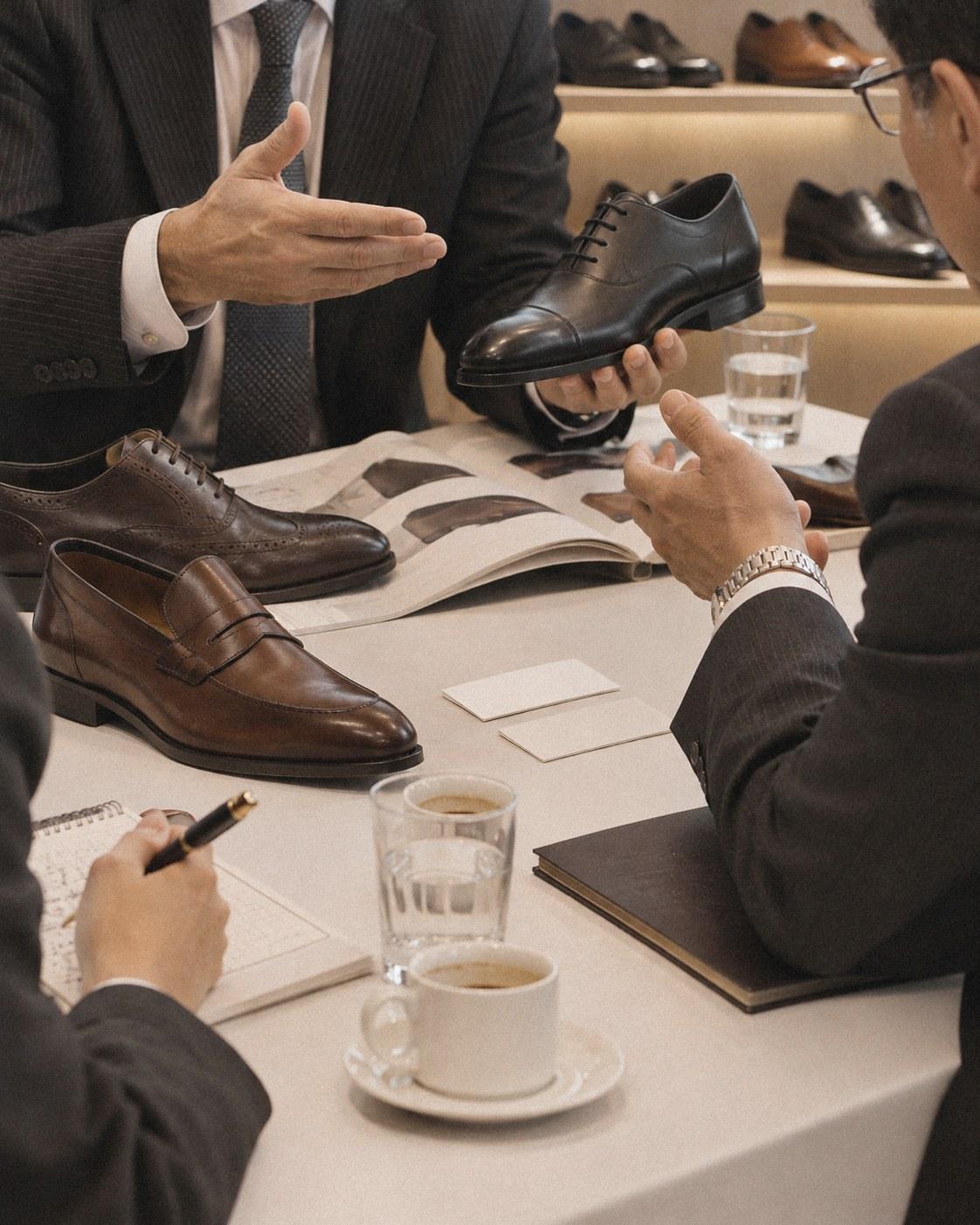
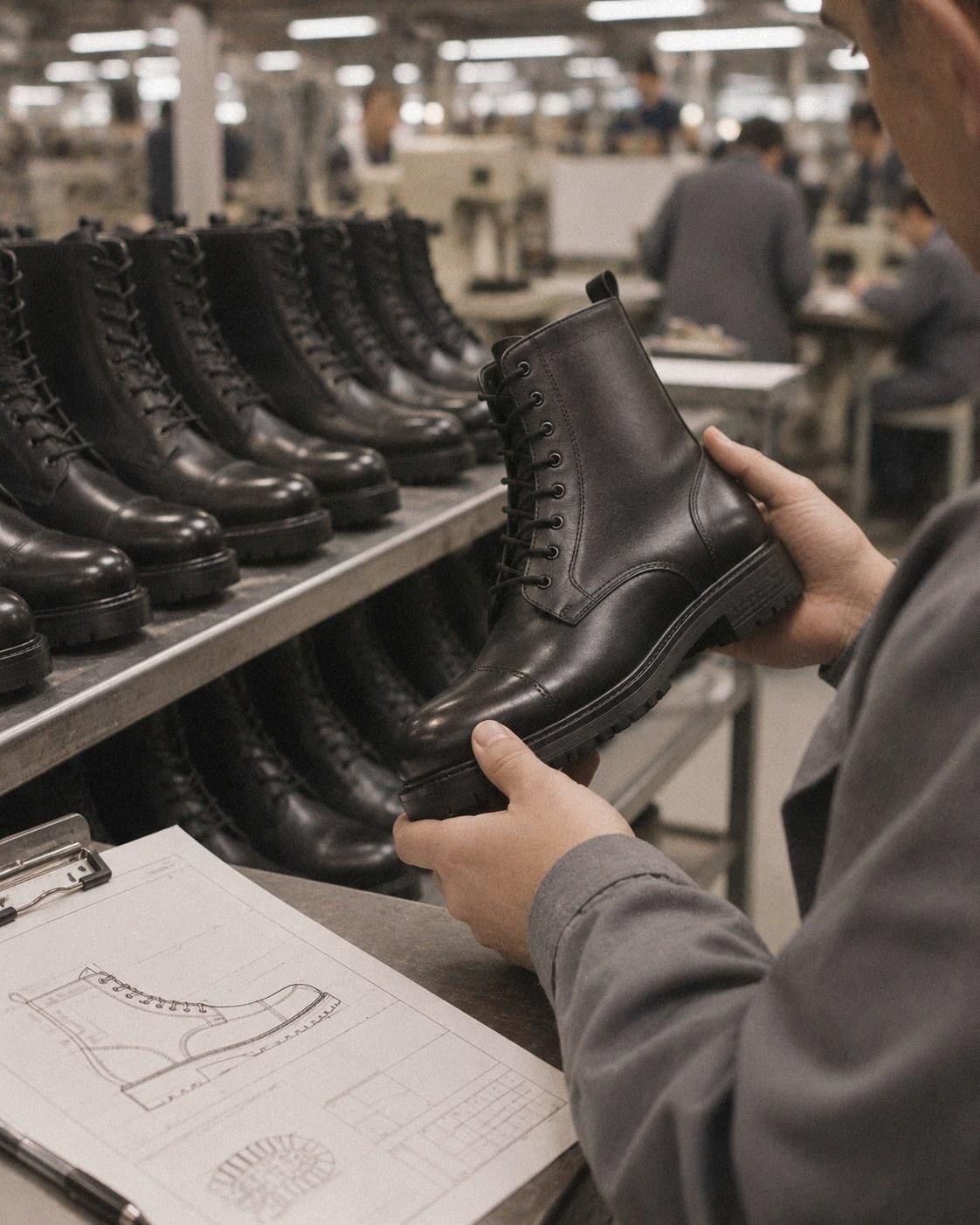
Relationships shaped by experience.
We continue to nurture the relationships we have built with buyers we met at trade fairs, with brands we have manufactured for over many years and with the institutions of our industry, while making room for new ones.